What Are French Drains?

If you’ve noticed waterlogged areas in your garden, damp patches around your foundation, or pooling water after heavy rainfall, you might have been told you need a French drain. But what exactly is a French drain, and how can it help protect your property from water damage?
At Elite Drains, we’ve installed countless French drains across Dorset, from Bournemouth to Weymouth, helping homeowners solve persistent drainage problems. In this guide, we’ll explain everything you need to know about French drains in straightforward terms.
What Is a French Drain?
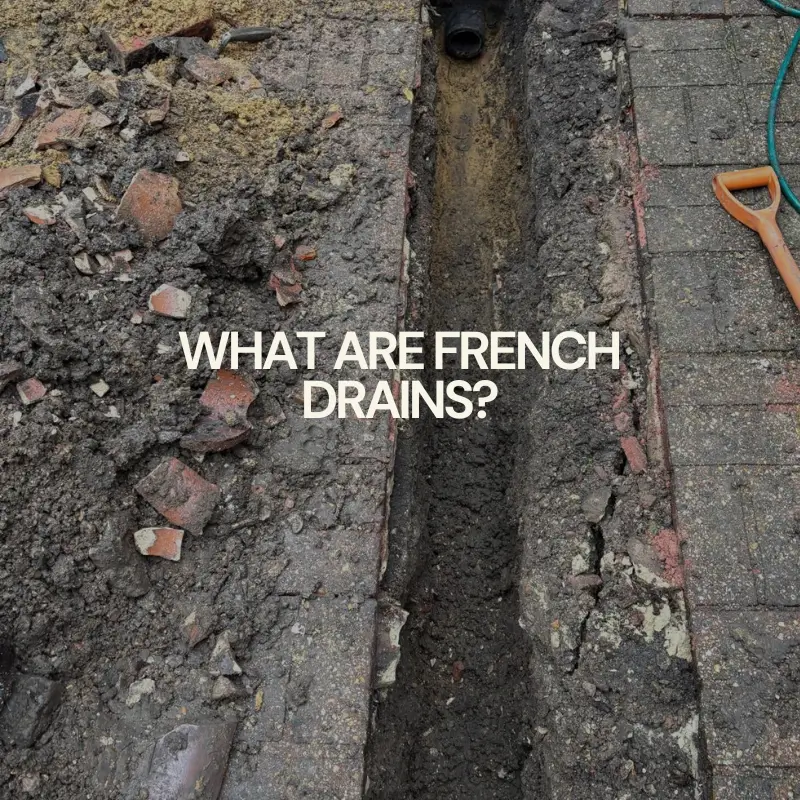
A French drain is a simple yet highly effective drainage system designed to redirect water away from areas where it causes problems. It consists of a gravel-filled trench containing a perforated pipe that collects and channels water away from your property.
The system works by providing water with an easy path to follow. When water saturates the soil around your home, it naturally flows into the gravel-filled trench, enters the perforated pipe through small holes, and is carried away to a safe discharge point.
Despite the name, French drains have nothing to do with France. They’re named after Henry Flagg French, an American lawyer and farmer who popularised the technique in his 1859 book on farm drainage. The system itself has been used in various forms for centuries, with earlier versions known as rubble drains or rock drains.
How Does a French Drain Work?
The beauty of a French drain lies in its simplicity. Here’s how the system functions:
Gravity does the work – Water naturally flows downhill, so French drains are installed with a gentle slope (typically 1% or 1 inch per 8 feet) that guides water away from problem areas.
Gravel provides a pathway – The trench is filled with gravel or stone aggregate, creating space for water to flow freely. This porous material allows water to move much faster than it would through soil.
The perforated pipe collects water – A pipe with holes runs along the bottom of the trench. As water flows through the gravel, it enters these perforations and is channelled away to a suitable outlet.
Filtration prevents clogging – Modern French drains typically include a geotextile fabric lining that prevents soil particles from mixing with the gravel and clogging the system over time.
The entire system works subsurface, relieving hydrostatic pressure around foundations and basements while keeping your property’s appearance intact.
Key Components of a French Drain
Understanding the parts of a French drain can help you appreciate how the system works:
The Trench – Typically 12-24 inches deep and 6-12 inches wide, excavated with a consistent downward slope towards the discharge point.
Perforated Pipe – Usually 100mm (4 inches) in diameter, made from PVC or flexible corrugated plastic with holes to collect water.
Gravel or Stone – Clean aggregate (typically 20-40mm) that won’t compact over time, allowing water to flow freely.
Filter Fabric – Geotextile material that wraps the gravel, preventing soil infiltration whilst allowing water through.
Where Are French Drains Used?
French drains solve various drainage problems around homes across Bournemouth, Poole, Dorchester, and throughout Dorset:
Around Foundations – Protecting basements and foundations from water damage by directing groundwater away from your home’s structure.
In Waterlogged Gardens – Improving soggy lawns and garden beds by lowering the water table and improving drainage.
Along Driveways and Patios – Preventing water from pooling on hard surfaces and causing damage or creating slip hazards.
Behind Retaining Walls – Relieving water pressure that can cause walls to crack, lean, or fail.
Problem Areas – Any low-lying spot where water consistently accumulates after rainfall.
In many cases, French drains work alongside other drainage solutions. For instance, they’re often combined with a soakaway installation to manage the collected water sustainably. If you’re unsure what a soakaway is, it’s essentially an underground structure that allows water to gradually percolate back into the ground.
French Drains vs Other Drainage Solutions
When researching drainage options, you might encounter several terms:
ACO Drains – These are surface channel drains with grates, ideal for driveways and patios where you need to collect surface water quickly. Unlike French drains which work underground, ACO drains are visible surface solutions.
Soakaways – Often used as the discharge point for French drains, soakaways are underground pits filled with rubble that allow water to disperse into surrounding soil.
Traditional Drainage – Standard piped drainage systems that carry water away in solid pipes rather than collecting it through perforations.
Each solution has its place, and sometimes the best approach combines multiple methods. That’s where professional assessment becomes invaluable.
Installation Considerations
While French drains might seem straightforward, proper installation is crucial for long-term effectiveness:
Slope and Depth – The trench must maintain consistent gradient for water to flow properly. Too shallow, and the system won’t capture enough water; too deep, and you risk damaging utilities.
Discharge Point – Water must have somewhere to go. This might be a soakaway, a storm drain, a daylighted outlet, or another appropriate discharge point. Government drainage regulations must be followed.
Soil Conditions – Clay-heavy soil, common in parts of Dorset, requires special consideration as it drains slowly and may need additional measures.
Existing Services – Underground utilities, water mains, and sewers must be located and avoided during excavation.
Improper installation can lead to system failure, property damage, or even exacerbate drainage problems. That’s why we always recommend professional installation by trained engineers.
How Long Do French Drains Last?
With proper installation and appropriate conditions, a well-constructed French drain can last 20-40 years or more. However, longevity depends on several factors:
- Quality of materials – Premium pipes, proper aggregate sizing, and quality filter fabric make a significant difference
- Soil conditions – Fine silty soils can gradually clog systems faster than sandy soils
- Maintenance – Periodic inspection and cleaning extend system life
- Root intrusion – Tree roots can penetrate pipes over time, especially in older systems
Getting a French Drain Installed in Dorset
If you’re experiencing drainage issues at your property in Christchurch, Bridport, Blandford Forum, Ferndown, or anywhere across Dorset, we can help.
At Elite Drains, we provide:
- Free, no-obligation quotes – We’ll assess your property and provide honest advice on the best solution
- Fast callouts – We respond quickly when you need drainage help
- Insured and DBS-checked engineers – Your property and peace of mind are protected
- Workmanship guarantee – We stand behind the quality of our installations
- No-obligation surveys – Understand exactly what you need before committing
Our team has extensive experience installing French drains and soakaway systems throughout Dorset. We’ll assess your specific situation, explain your options clearly, and deliver a solution that actually works.
Whether you need a simple garden French drain or a comprehensive perimeter drainage system around your foundation, we have the expertise and equipment to install it properly.
Book Your Drainage Survey Today
Don’t let water damage your property. If you’re dealing with persistent drainage problems, a French drain might be the perfect solution.
Contact us today to book a free, no-obligation survey. We’ll visit your property, assess the situation, and provide expert recommendations tailored to your needs.
Our friendly team serves homeowners throughout Bournemouth, Poole, Dorchester, Weymouth, and all surrounding Dorset areas with professional, reliable drainage solutions you can trust.
Ready to solve your drainage problems? Book your survey with Elite Drains today.